Long Term Impact Overview:
Chapman Miami Hope Clinic
When the Chapman Partnership was founded in 1995, more than 8,000 people were living on Miami’s streets. By creating two Homeless Assistance Centers, Chapman redefined how homelessness is addressed, offering not just a roof but comprehensive services, including medical, dental, and psychiatric care.
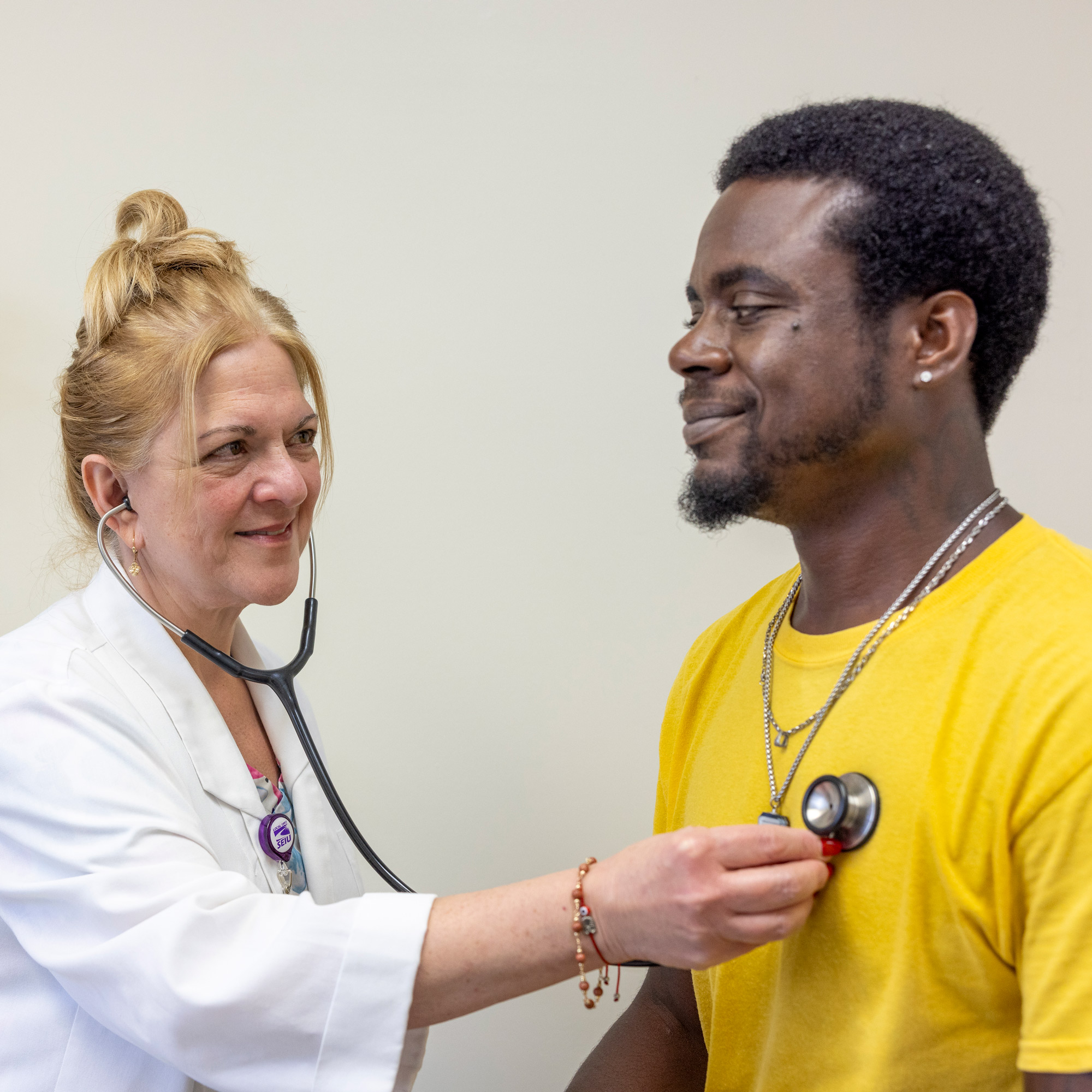
Recognizing that healthcare is essential to stability, the Health Foundation of South Florida partnered with Chapman to launch the Miami Hope Clinic in 1995. It was a first-of-its-kind initiative designed to stabilize and address the immediate health needs of people experiencing homelessness. Over time, the clinic has become a cornerstone of Miami-Dade County’s Continuum of Care, helping thousands of individuals take their first steps toward recovery and independence.
Each year, these clinics improve access to costeffective healthcare for hundreds of homeless men, women, and children at Chapman Partnership North and South.
From 1995 to 2000, the Health Foundation, working in partnership with Jackson Health System, directly operated the Miami Hope Clinic, designing the facility, hiring staff, and coordinating triage into the continuum of care. The Health Foundation’s initial $3.3 million investment was a milestone for Miami-Dade County, laying the groundwork for an integrated system that treats health and housing as inseparable.
Today, that legacy continues through Jackson Health System’s leadership and Chapman’s unwavering commitment. More than 105,000 individuals have been served since inception, with an average of 63% successfully placed in stable housing.
One patient’s story reveals the life-changing power of that model.
On an unusually cold winter night, workers brought a woman to Chapman Partnership after temperatures dipped below 50 degrees. She had lived on the streets of Miami for more than a decade, with no access to medical care. When she arrived at the clinic, she complained of pain in her breast. Upon examination, clinicians discovered an advanced tumor that had broken through the skin. She was immediately referred to a Jackson Health oncologist and, with the help of a Chapman case manager, was placed in a long-term care facility where she could receive the treatment and stability she needed.
Chapman’s long-term impact proves a simple but powerful truth: when healthcare is integrated with housing, education, and social services, entire lives can be rebuilt, one patient, one family, one home at a time.